
Fundamentals of Networking
Internet networking is the foundation of modern communication, enabling computers, servers, and devices to exchange data across local and global networks. It relies on a combination of hardware, software, and protocols to ensure reliable and secure connectivity.
What is RADIUS Server?
A RADIUS (Remote Authentication Dial-In User Service) server is a central server that provides authentication, authorization, and accounting (AAA) services for remote users accessing a network. It acts as a hub for managing user credentials and network access policies, allowing administrators to centrally control and enforce access rules.
Difference Between RADIUS and TACACS+:
RADIUS and TACACS+ are both AAA (Authentication, Authorization, and Accounting) protocols used to manage network access, but they differ in their architecture and capabilities. RADIUS combines authentication and authorization, while TACACS+ separates them into distinct processes. TACACS+ also offers more granular control over user permissions and encrypts the entire packet content, making it more secure than RADIUS, which only encrypts the password. TACACS+ was developed by Cisco and is not an open standard, although it is widely supported by other vendors. TACACS+ is often used for administrator access to network devices like routers and switches.
Summary: RADIUS is best suited for user access control in network services, while TACACS+ is preferred for administrative access to network devices due to its enhanced security and command-level control.
GlobeTek is fully equipped to efficiently manage AAA (Authentication, Authorization, and Accounting) protocols, ensuring secure, scalable, and reliable network access control.
What is Access Control List (ACL) in Networking?
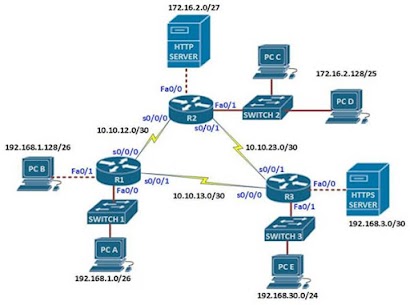
In networking, an Access Control List (ACL) is a set of rules used to filter network traffic, essentially acting as a gatekeeper for network resources. ACLs determine which traffic is allowed or denied based on criteria like IP addresses, ports, and protocols. They are crucial for network security, helping to protect sensitive data, control access, and prevent unauthorized access.
GlobeTek’s flagship product, 24ONLINE, efficiently manages Access Control Lists (ACL) to ensure secure and streamlined network access. With robust ACL management, 24ONLINE allows administrators to define, control, and monitor user permissions and traffic flow with precision — enhancing network security while maintaining optimal performance.
What is AD (Active Directory)?
Active Directory (AD) is a directory service developed by Microsoft for Windows domain networks. It is used to store, organize, and manage user information, devices, permissions, and other resources in a centralized and secure manner.
Key Features of Active Directory:
Centralized user authentication and authorization
Group policy management
Integration with Windows servers and applications
Supports secure access control across the network
Use Case:
Enterprises use AD to manage thousands of users, computers, and policies efficiently within a domain or networked environment.
What is LDAP?
LDAP (Lightweight Directory Access Protocol) is an open and standardized protocol used to access and manage directory information over a network. It enables applications to query and modify user and resource information stored in a directory service.
Key Characteristics:
Protocol Type: Application protocol (based on TCP/IP)
Purpose: Retrieve and manage data in directory services (e.g., user credentials, emails, device information)
Structure: Uses a hierarchical (tree-like) structure to organize directory entries
Common Ports: TCP/UDP 389 (LDAP), TCP 636 (LDAPS – secure LDAP)
Use Cases:
User authentication and login services (e.g., Single Sign-On)
Managing user roles, groups, and permissions
Email directories (e.g., for Outlook or Exchange)
Integrating enterprise applications (e.g., HR systems, intranet portals)
Common LDAP Directory Services:
Microsoft Active Directory
OpenLDAP
Apache Directory Server
Novell eDirectory
Summary:
LDAP is a lightweight and efficient protocol that allows organizations to centralize identity and directory information, improving security, scalability, and administration across IT systems.
24ONLINE (Flagship product of GlobeTek Infoway), is fully equipped to manage AAA protocols such as RADIUS and LDAP efficiently, ensuring secure, scalable, and centralized network access control.
What is EAP?
Extensible Authentication Protocol (EAP) is a framework used in networking for authentication, primarily in wireless and wired networks, and for secure network access. It provides a flexible structure that supports various authentication methods, rather than being a single authentication protocol itself. EAP is commonly used in conjunction with 802.1X for secure network access, where the access point or switch acts as an authenticator, and the client device uses an EAP method to authenticate with a backend authentication server.
What is SAML?
SAML (Security Assertion Markup Language) is an open standard for exchanging authentication and authorization data between parties, primarily between an Identity Provider (IdP) and a Service Provider (SP). It enables Single Sign-On (SSO) functionality, allowing users to authenticate once with an IdP and access multiple SPs without needing to re-enter credentials. SAML is an XML-based framework that defines how these parties communicate and share information.
What is Multi-tenancy in networking?
Multi-tenancy in networking refers to a network architecture where a single network infrastructure serves multiple distinct customers or “tenants”. Each tenant operates within a logically isolated environment, sharing the underlying network resources while maintaining data privacy and security.
NAT (Network Address Translation)
NAT allows multiple devices on a local network to access the internet using a single public IP address, conserving address space.
Firewalls and Security
Firewalls and other security measures protect networks from unauthorized access and cyber threats by filtering traffic based on defined rules.
Wireless Networking
Wi-Fi technology allows wireless communication using standards like 802.11ac/ax, providing mobility and ease of connectivity.
Network Protocols
Common internet protocols include:
HTTP/HTTPS – Web browsing
FTP/SFTP – File transfer
SMTP/POP3/IMAP – Email
DHCP – Automatic IP assignment
TCP/IP Model
The TCP/IP protocol suite governs how data is transmitted across the internet. Key layers include:
Application Layer
Transport Layer
Internet Layer
Network Access Layer
A solid understanding of internet networking fundamentals is essential for anyone working in IT, cybersecurity, software development, or systems administration. It ensures secure, efficient, and scalable communication across today’s digital world.